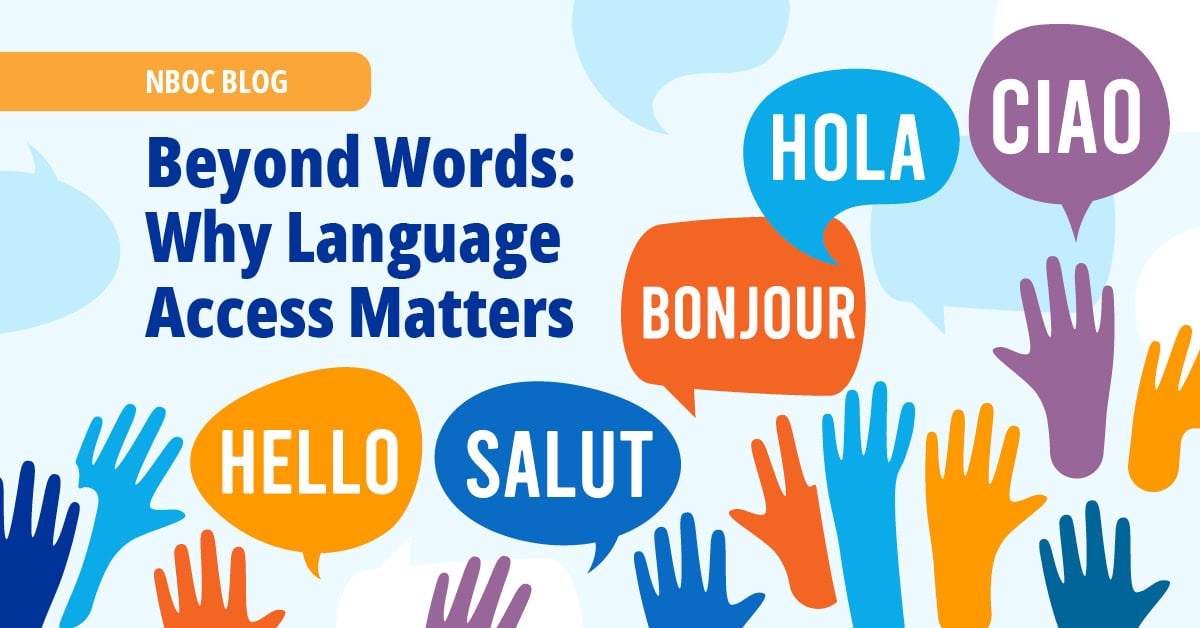
Hispanic Heritage Month is an opportunity to celebrate the cultures, histories, and contributions of the Hispanic community across the United States. It is also an opportunity for organizations to consider how their programs and services reflect and respond to the diverse communities they serve, and the role language access plays in creating meaningful connections. Can the people you serve fully understand and be understood by your organization?
For hospitals, health organizations, nonprofits, and other community-serving institutions, language access can directly shape a person’s experience. When important conversations involve healthcare, services, benefits, or other complex information, simply communicating is not enough. Understanding matters.
That is where professional language interpretation can make a difference.
Interpretation Is More Than Translation
Translation and interpretation are often used interchangeably, but they serve different purposes. Translation generally refers to converting written information from one language to another, while interpretation facilitates communication between people in real time.
And effective interpretation is more than exchanging words.
Professional interpreters help accurately convey meaning, tone, emotion, and understanding during a live conversation. This human element can be particularly important when conversations are sensitive, complicated, or highly personal.
Language Access Can Help Build Trust
Imagine trying to describe symptoms to a healthcare provider, understand instructions about your care, navigate available community resources, or ask an important question in a language you do not fully understand.
Even small communication gaps can create frustration and uncertainty.
Providing access to professional interpretation can help organizations create an environment where people are better able to ask questions, understand information, and actively participate in conversations that affect them.
What Should Organizations Look for?
Language needs can arise at any time, so organizations should consider whether their interpretation resources can respond when and how they are needed.
Depending on the organization and community, that may mean looking for:
- Multiple ways to connect, including phone, video, and in-person interpretation
- Broad language availability, including American Sign Language (ASL)
- On-demand access when unexpected needs arise
- Professional interpreters who can convey meaning beyond literal word-for-word translation
- Privacy and security protections
For healthcare organizations in particular, protecting sensitive information is essential. Access to secure, HIPAA-compliant professional interpretation can help organizations support communication while maintaining appropriate privacy standards.
Creating Access Beyond Hispanic Heritage Month
Hispanic Heritage Month can serve as a valuable reminder to examine how organizations communicate with the communities around them. But language access is not limited to one community, language, or month of the year.
Creating meaningful access means being prepared to communicate with people when they need you.
NBOC’s Language Interpretation Services provide access to real-time professional interpretation by phone, video, and in person, available 24 hours a day, 365 days a year, in more than 240 languages, including ASL. Services are HIPAA-compliant and offered through a flexible pay-by-the-minute model with no monthly or annual usage requirements.
Whether your organization needs occasional interpretation support or a scalable long-term solution, NBOC can help you explore practical options designed around the communities you serve.
Because language should never be a barrier to being heard, understood, or supported.